Table of Contents
Introduction
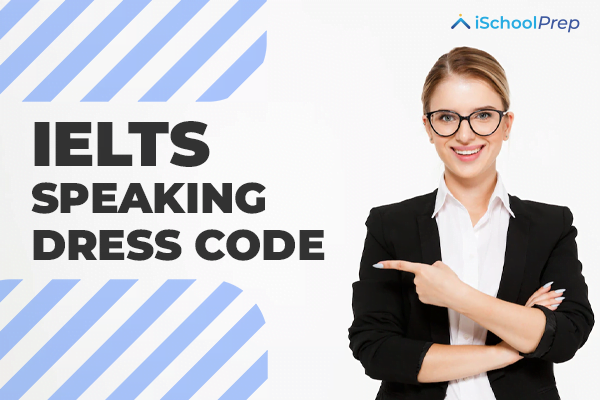
When it comes to the IELTS speaking dress code, many test takers think they must dress formally to impress the examiner but that’s not true. There is no official dress code for the IELTS Speaking test. What matters most is wearing clothes that make you feel relaxed, confident, and focused on using your English fluently.
Your outfit won’t affect your score, but your comfort definitely will. In this guide, you’ll learn what to wear, what to avoid, and how to choose the right outfit depending on weather, cultural comfort, and test center environment.
IELTS Speaking dress code | An overview of the IELTS exam
The IELTS Speaking test is a face-to-face interview designed to assess how well you communicate in spoken English. It is the same for both Academic and General Training candidates and is always conducted by a certified IELTS examiner. The entire session is recorded for quality checks or review purposes.
The test lasts 11–14 minutes and is divided into three parts, each focusing on different speaking skills such as introducing yourself, discussing a topic in detail, and engaging in a two-way conversation.
When booking your IELTS exam, you can view the available speaking test slots, or you may contact your test centre for scheduling details. After completing the registration, your test centre will confirm the date and time of your Speaking test.
Read More: How to Prepare for IELTS Exam, 5 Expert Tips
How Should You Prepare for the IELTS Speaking Test?
Your appearance often creates the first impression, and while it may seem minor, dressing well can help you feel confident during the IELTS Speaking test. The good news is there is no official IELTS Speaking dress code. The key is to dress in a way that makes you feel comfortable, relaxed, and confident, allowing you to focus entirely on demonstrating your English-speaking skills.
Tips to Dress Appropriately for the IELTS Speaking Test
Your outfit should strike a balance between comfort and professionalism. When you feel at ease, you are more likely to communicate naturally and focus better during the test. Here are some helpful suggestions to guide your choice of attire:
Avoid Formal Business Suits
You do not need to wear a suit and tie. The IELTS Speaking test is formal, but it is not a job interview. Wear something neat and presentable that makes you feel confident. If suits make you uncomfortable, choose smart casual clothing instead.
Choose Comfortable Shoes
Comfortable footwear is essential. Tight or uncomfortable shoes can distract you during the test and affect your performance. For women, it’s best to avoid high heels—they may look elegant but can be uncomfortable and stressful to walk in. Opt for shoes that allow you to sit and move comfortably.
Go Easy on Strong Fragrances
Wearing mild perfume or cologne is perfectly fine and can boost your confidence. However, avoid applying strong fragrances, as they may be overwhelming or distracting in a small test room.
Dress According to the Weather
Consider the weather and test center location.
- If the center is in a colder area, carry a jacket or coat to stay warm.
- In warmer regions, lightweight clothing such as a short-sleeved shirt or a simple dress is more suitable.
The goal is to stay comfortable throughout the test so you can focus on speaking clearly and confidently.
Read More: IELTS General Training Practice Test: Why is it Important?
Should You Wear a Mask During the IELTS Speaking Test?
Whether you need to wear a mask during the IELTS Speaking test depends on the health and safety regulations in your country. All test takers, examiners, and staff must follow the rules set by local authorities. You should carry your own mask to the test center. However, be aware that you may be asked to briefly remove it for identity verification or security checks.
Wearing a mask will not affect your IELTS Speaking score in any way. The examiner can still understand you clearly, and if at any point you don’t hear or understand a question, you can politely ask them to repeat or rephrase it. This is one of the advantages of having a face-to-face Speaking test with a real examiner.
Key Takeaways
- The IELTS Speaking dress code is simple, there is no fixed rule, and the best choice is clothing that keeps you relaxed and confident during the test.
- Whether you’re looking for the dress code for IELTS Speaking in India or anywhere else, the guideline remains the same: wear neat, comfortable, weather-appropriate clothes that help you focus on your performance.
- Remember, the dress code for IELTS Speaking test does not affect your score. What truly matters is clear communication, confidence, and comfort on the test day.
Liked this blog? Also read, Parts of Speech in English | An overview on 8 important sections
Feel free to reach out to us regarding any queries about studying abroad and the various study abroad tests!
FAQs
Question 1. What is the dress code for IELTS Speaking test?
Answer. There is no official dress code for the IELTS Speaking test. You can wear anything that makes you feel confident and comfortable — whether it’s casual, semi-formal, or traditional clothing.
Question 2. Is there any dress code for IELTS Speaking India?
Answer. No, there is no special dress code for IELTS Speaking in India. Test takers can dress casually or semi-formally as long as they feel relaxed and presentable.
Question 3. Can I bring my phone to the IELTS?
Answer. It is ok to carry a cell phone, but you must turn it off and leave it with your other personal things in a separate location designated by the test inspector.
Question 4. Can I wear my watch throughout the IELTS speaking test?
Answer. Watches are not permitted in the testing room. Every exam room will feature a wall clock.
Question 5. Should I avoid wearing accessories during the IELTS Speaking test?
Answer. You can wear accessories, but keep them minimal. Large or noisy accessories may distract you or the examiner, so it’s better to choose simple ones.
Question 6. Can wearing a mask affect my IELTS Speaking score?
Answer. No, wearing a mask will not affect your score. The examiner evaluates only your speaking ability. However, you may be asked to briefly remove your mask for identity verification.